
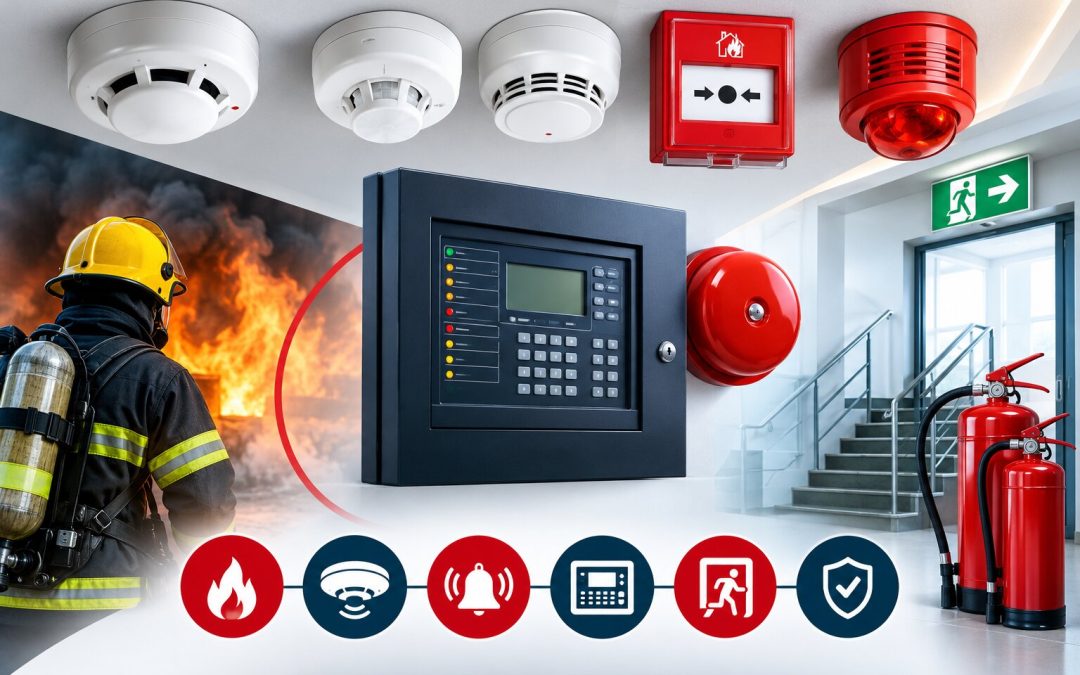
A reliable fire alarm system is an important part of protecting people, buildings, equipment, and property. It can detect signs of fire at an early stage and provide an alert, giving occupants valuable time to respond and evacuate safely.
From residential buildings and offices to schools, warehouses, hotels, and industrial facilities, the right fire detection solution depends on the building’s size, layout, occupancy, and specific fire risks.
What Is a Fire Alarm Systems?
A fire alarm system is a combination of devices designed to detect smoke, heat, or other signs of fire and provide an early warning. A typical system may include detectors, manual call points, alarm sounders, control panels, and other connected equipment.
Professional fire alarm suppliers can help property owners select suitable equipment and provide services such as system design, installation, testing, commissioning, and maintenance.
How Does a Fire Alarm System Work?
Fire alarm systems use detection devices to identify signs of a potential fire. When a detector identifies smoke or excessive heat, it sends a signal to the control panel. The panel then activates the appropriate alarm devices to warn people inside the building.
Smoke and Heat Detection
Smoke detectors are commonly used to identify smoke at an early stage, while heat detectors respond when temperatures reach a specified level. The appropriate detector depends on the room, environment, and potential fire risks.
Alarm and Notification
Once a fire condition is detected, sounders and other notification devices can alert occupants. Manual call points can also allow people to activate the alarm when they discover a fire.
Why Is Fire Detection Important?
Early detection can provide valuable time for people to react during an emergency. A properly designed fire detection system can identify smoke or heat and activate an alarm before a fire spreads further.
Fire detection and alarm systems are widely used in homes, offices, schools, hotels, shops, warehouses, and industrial buildings. The system should be planned according to the building’s individual requirements rather than using the same arrangement for every property.
Choosing the Right Fire Alarm System
Choosing a fire alarm system requires consideration of several factors, including the size of the building, number of occupants, room layout, environmental conditions, and potential fire hazards.
Consider the Building Requirements
A small office may require a different arrangement from a warehouse or industrial facility. The location and type of detection devices should be selected based on the characteristics and use of each area.
Choose Suitable Equipment
Quality detectors, control panels, alarm devices, and other components can contribute to reliable system operation. Working with experienced fire alarm system suppliers can help property owners select suitable equipment for their requirements.
Fire Alarm Installation and Maintenance
Professional installation is important for ensuring that detectors, control panels, alarm devices, and other components are correctly positioned and connected.
Installation should be followed by proper testing and commissioning. Regular maintenance is also necessary to identify faults, damaged components, battery issues, or other problems that could affect system performance.
Regular Testing
Regular testing helps confirm that detectors, alarms, manual call points, control panels, and other components are operating as expected.
Planned Maintenance
A planned fire safety maintenance service can help property owners keep their fire protection equipment in working condition and address potential issues before they become serious.
Other Fire Protection Equipment
A fire alarm system is one part of a complete fire protection strategy. Depending on the property, additional equipment may be required to help prevent, control, or respond to fire emergencies.
Fire Extinguishers
Fire extinguishers provide an important first response to certain types of fire. Different extinguishers are designed for different fire classes, so the appropriate type and capacity should be selected according to the property’s risks.
For buildings in Dubai, fire extinguishers and related equipment can be selected based on the property’s requirements.
Fire Sprinkler Systems
Fire sprinklers can provide an additional layer of protection by helping control a fire at an early stage. A properly planned fire sprinkler system should take into account the building layout, occupancy, water supply, and applicable safety requirements.
Fire Suppression Systems
Some areas require specialised protection because of the equipment or materials present. In these situations, a suitable fire suppression system may provide additional protection.
Fire Safety for Different Buildings
Fire safety requirements can vary significantly between different types of properties. Offices, schools, hotels, residential buildings, warehouses, and industrial facilities may each require different combinations of detection and protection equipment.
A complete fire safety plan can bring together alarm systems, extinguishers, sprinklers, suppression systems, emergency equipment, and regular maintenance based on the specific needs of the property.
Professional Fire Alarm Solutions in Dubai
Choosing the right supplier is an important step when installing or upgrading a fire alarm system. A professional provider should be able to support the complete process, from selecting suitable equipment to installation, testing, and ongoing maintenance.
If you are looking for fire alarm solutions in Dubai, choosing a provider with experience in fire detection, installation, testing, and maintenance can help ensure that the system is appropriate for your building.
Conclusion
A properly planned fire alarm system can provide an important early warning during a fire emergency. However, effective fire protection involves more than installing an alarm. Regular testing, maintenance, suitable extinguishers, sprinklers, and other protection systems all have an important role to play.
By assessing the building’s individual requirements and maintaining its fire protection equipment properly, property owners can improve emergency preparedness and help protect people and property.